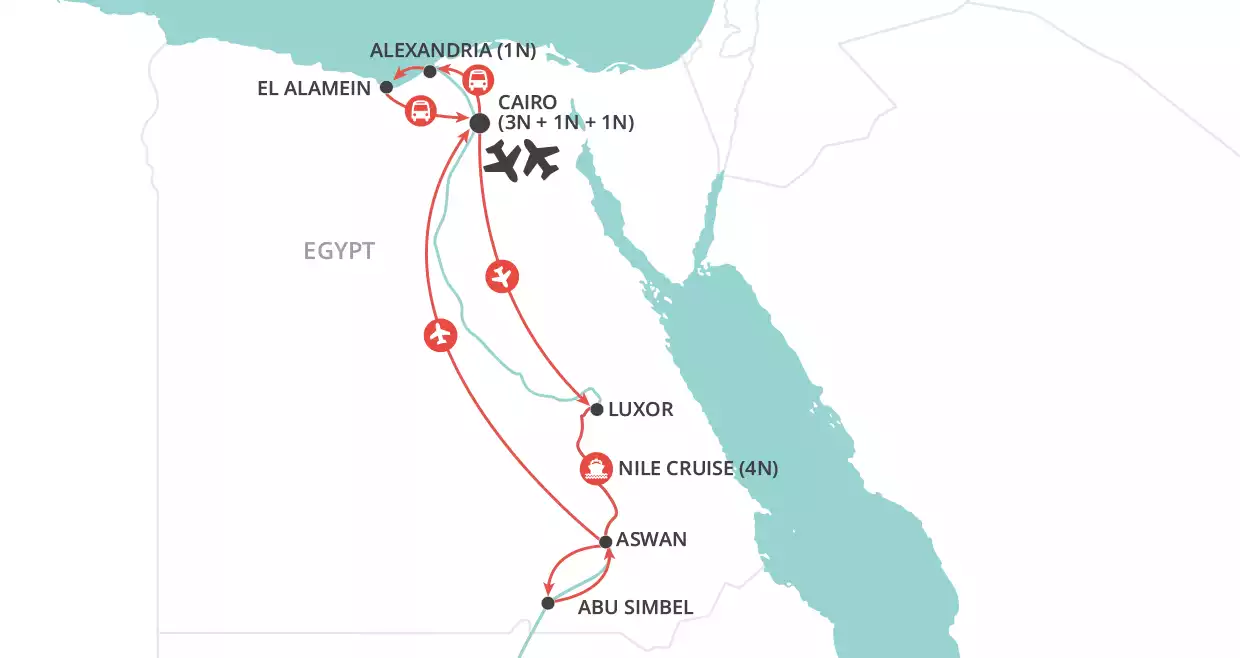
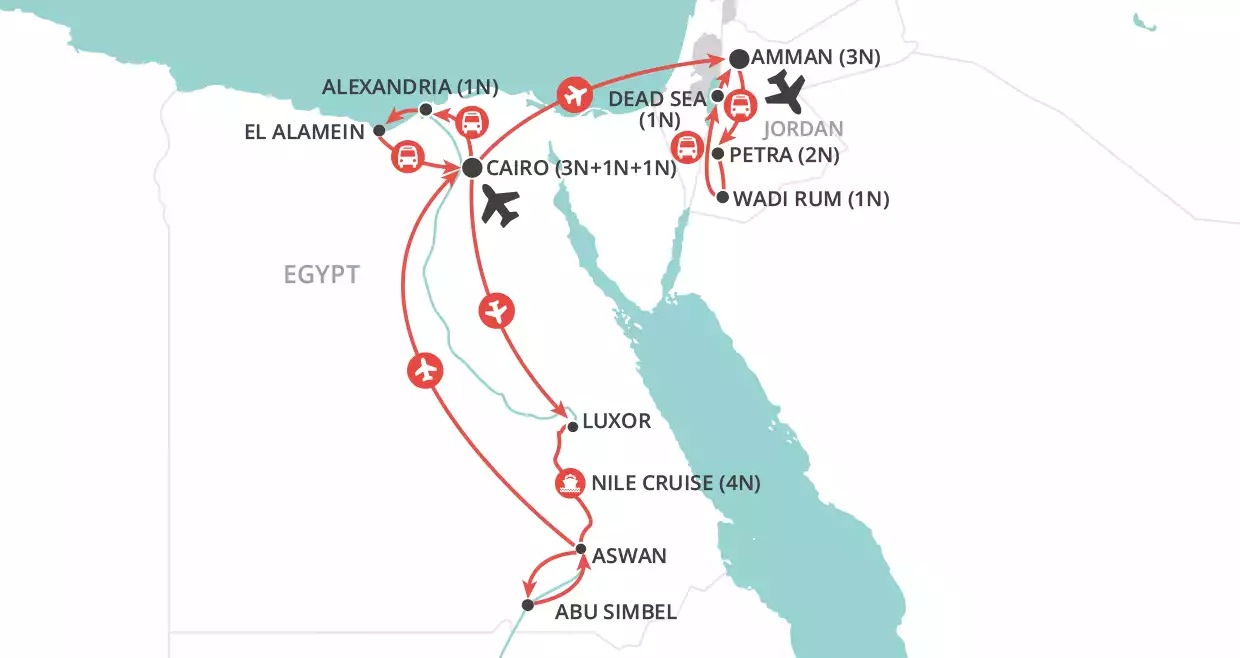
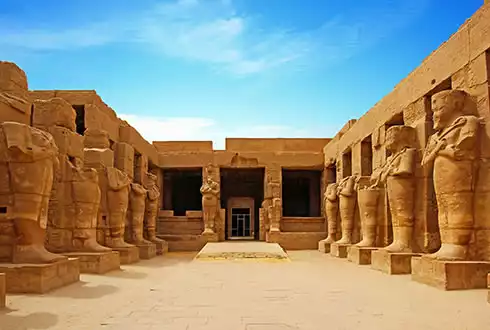
One of the oldest continuously inhabited settlements in the world, the ancient city of Aswan is perhaps best known for its namesake dam, built in the 1960s. But Aswan was once the southern frontier of Ancient
Egypt, built just above the Nile’s First Cataract, river rapids that provided a natural defence at the point where civilisation ended.
Aswan is a laidback place, sat on the banks of the Nile, with a series of islands boasting the remains of age-old civilisations. Much of the granite used to build ancient monuments came from quarries just outside the city, many still operating today – visit to see the Unfinished Obelisk’, commissioned in the 15
th century BC by Queen Hatshepsut but abandoned when cracks formed during carving. You can also learn more about Nubia (the neighbouring ancient region to Egypt) and the power struggle and cross influence between Nubia and Egypt. Many Nubian artefacts, saved by UNESCO before the Aswan Dam flooded the region, can be found in the excellent Nubia Museum.
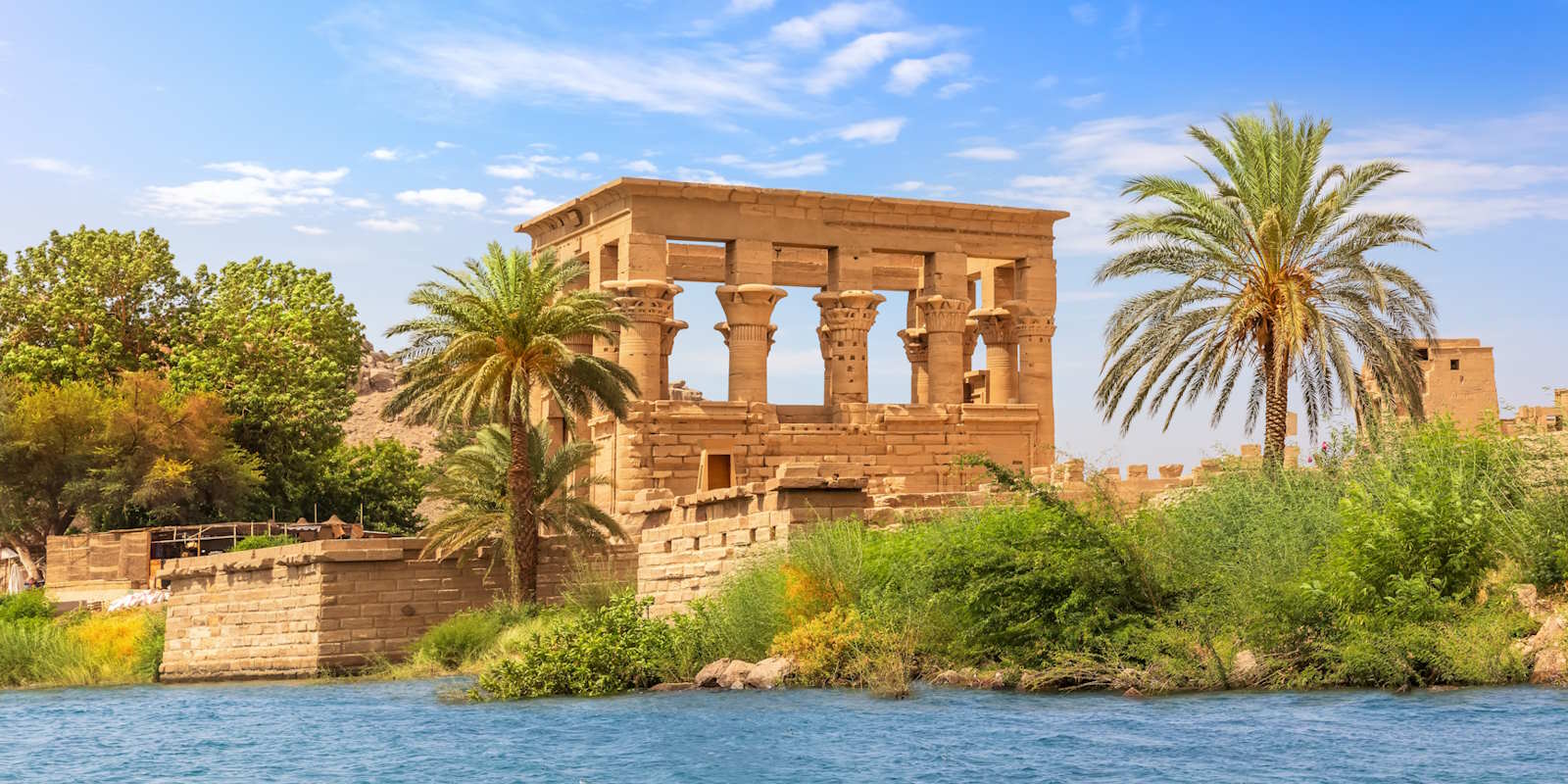
Also rescued from the creation of Lake Nasser was the Temple of Philae, which was moved from one river island to another, one of Egypt’s final classical temples, built in the 600s BC. Dedicated to Isis, the goddess of magic, motherhood and healing, the temple was the centre of worship for the Isis Cult with beautifully carved pillars and (relatively) modern hieroglyphics, carved in 394 AD. The more distant Abu Simbel, also saved from the flood waters is also reachable from Aswan.