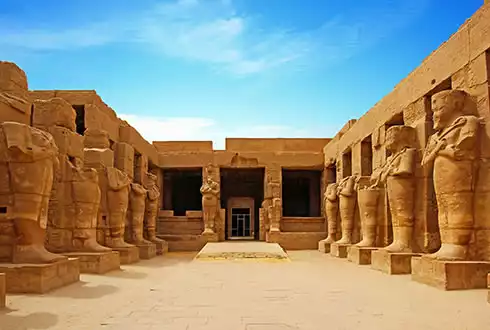
Like other of the world’s most extraordinary sites, what are now the Abu Simbel temples were lost to the world for much of their existence. They were stumbled upon by chance by a Swiss explorer in 1813, who noticed a single colossal head sticking out of the sand. But that’s not the end of the story of these twin temples. Originally carved into the mountainside of the west bank of the Nile, in the 1960s the temples were completely deconstructed and moved to an artificially created hill on higher ground, to save them from being submerged in Lake Nasser, formed by the Aswan High Dam in 1971. Today, the temples sit on the shores of the lake, the façade of the Great Temple one of the most iconic images of Egypt.
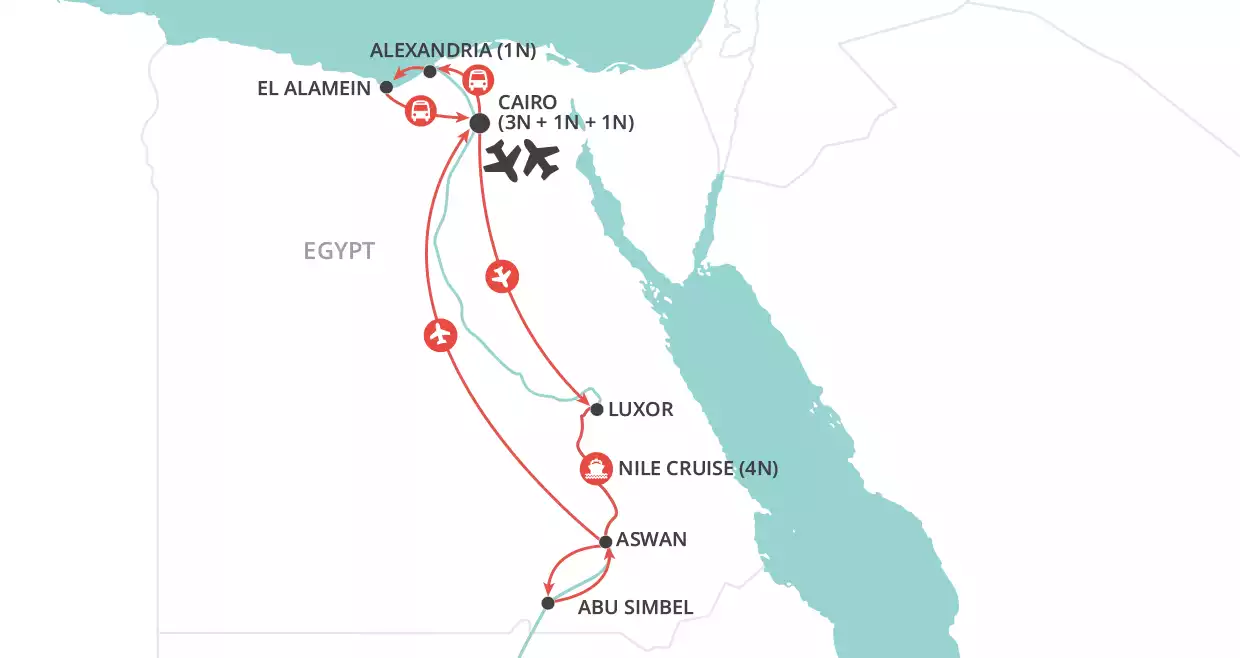
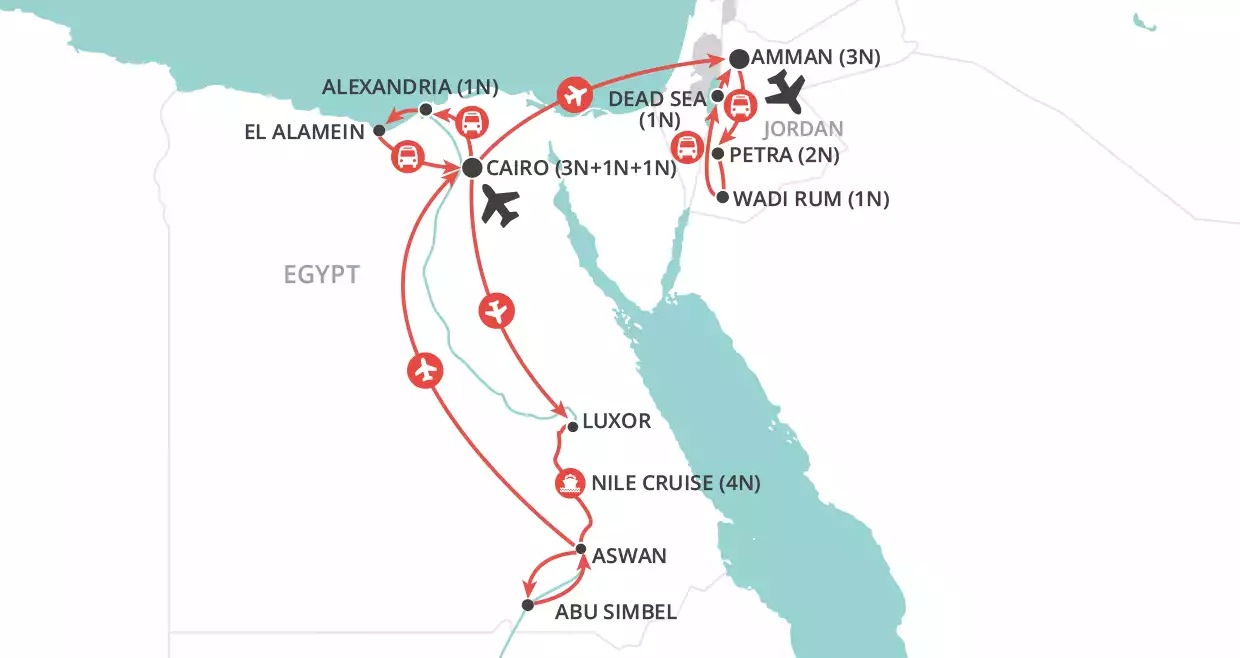
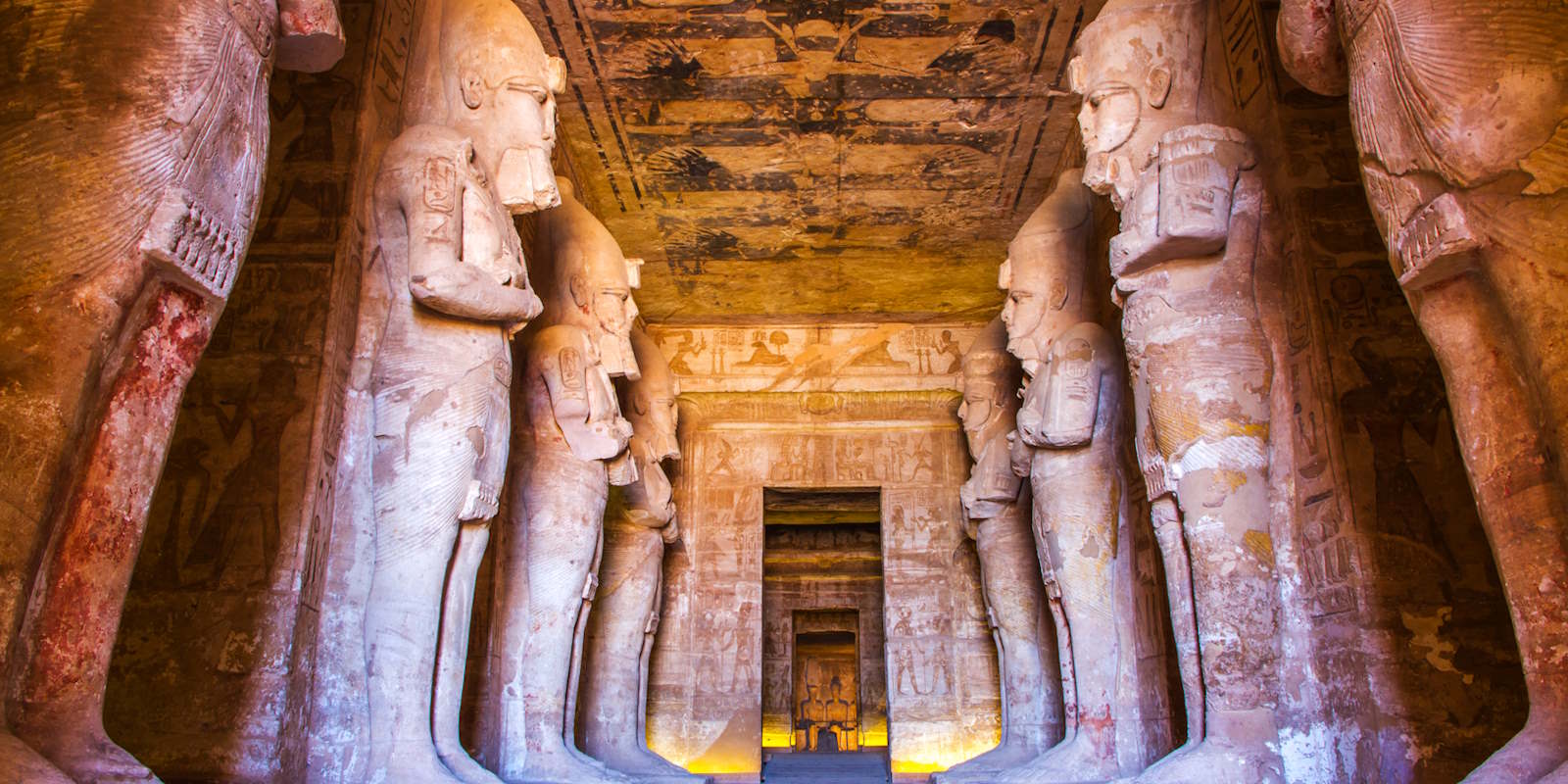
Located 230 kilometres from Aswan, the temples were built by Ramses the Great on the very edge of his empire, to showcase his power for anyone entering his domain. The Great Temple features four twenty-metre-high colossi of Ramses II himself, while within, the Hypostyle Hall is flanked by more statues and decorated by images of the Battle of Kadesh. The second, a smaller Temple of Hathor, features Queen Nefertari, the favourite wife of Ramses II, and their children on the façade.
Subscribe to our newsletter for the latest offers and receive €100pp
off your Wendy Wu tour.

 Subscribe to our newsletter for the latest offers and receive €100pp
off your Wendy Wu tour.
Subscribe to our newsletter for the latest offers and receive €100pp
off your Wendy Wu tour.